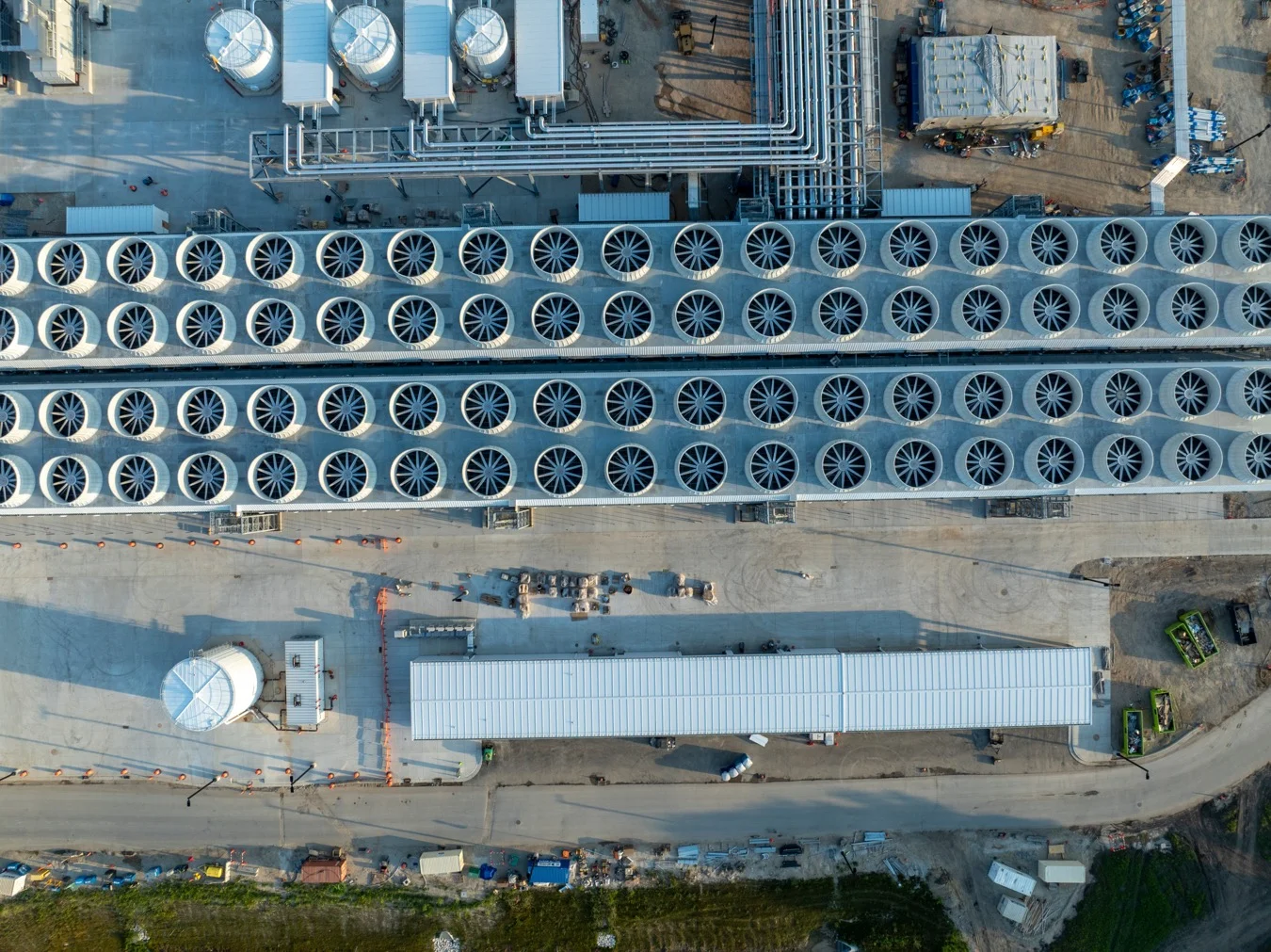
What it takes to deliver a datacentre: a construction perspective
Europe is in the middle of a datacentre boom. Driven byartificial intelligence, cloud migration, and an almost insatiable appetite fordata, demand for digital infrastructure is accelerating at a pace the industryis still catching up with.
But while much of the conversation focuses on technology, energy policy, and real estate, there's a part of the story that doesn't get told often enough: how you actually build these environments.
Datacentre construction is one of the most complex, high-stakes disciplines in the built environment. Done well, it's invisible the facility opens on time, systems come online, operations begin. Done poorly, the consequences can be severe: missed go-live dates, costly remediation, and infrastructure that underperforms from day one.
At Woodall's, we've been delivering critical environments across Europe for years. Here's what we've learned about what it actually takes to get a datacentre right.
Construction has to lead from day one
In many building projects, construction is handed a design and told to deliver it. In data centre projects, that model fails. The interdependencies between structural, mechanical, electrical, and commissioning are too complex, and the margin for error too small, to treat construction as a downstream function.
The most successful datacentre projects we've worked on are ones where construction thinking was present from the earliest stages, informing procurement strategy, shaping the programme, and flagging buildability risks before they become site problems.
That means asking the right questions at the start. What are the power density requirements, and how does that affect structural loading? Where are the critical path risks, and how do we protect against them? What's the procurement window for long-lead items, and have we started those conversations yet?
These aren't questions that can wait until the design iscomplete. By then, the answers are already more expensive than they needed tobe.
Power and cooling aren't just engineering problems
The technical requirements of a modern datacentre including high-density power distribution, precision cooling, redundant systems, rigorous containment, are well understood by engineers. What's less often discussed is how those requirements shape the construction process itself.
Power density is climbing. The shift towards AI workloads means that what was considered a high-density environment five years ago is now standard. Cooling solutions that once relied on traditional air-based systems are giving way to liquid cooling, immersion cooling, and hybrid approaches, each of which brings its own coordination challenges on site.
For a construction team, this translates directly into sequencing complexity. Trades that might have worked in relative isolation on a conventional build now need to be coordinated with a precision that leaves very little room for programme drift. Tighter installation tolerances, more complex inspection regimes, and an expanded commissioning scope all have to be built into the plan from the start.
The construction programme isn't something you retrofitaround the engineering, it has to grow alongside it.
Programme is everything
In commercial fit-out or even complex office projects, a fewweeks of slippage is an inconvenience. In datacentre construction, it can be acrisis.
Clients have contractual go-live commitments. Equipment deliveries are scheduled months in advance. Operational teams are onboarding. The consequences of a delayed handover ripple outward in ways that are very difficult and very expensive to absorb.
That's why at Woodall's, we treat programme management as a core construction discipline rather than an administrative function. It starts at tender stage, where we identify critical path risks before they become live problems. It continues through procurement, where protecting against supply chain pressure requires proactive decision-making, not reactive firefighting. And it runs through every site meeting, every daily briefing, and every conversation with our clients.
Real-time, transparent reporting matters here. The clients we work with on critical infrastructure need to know exactly where their project stands at any given moment not filtered through optimism and not buried in complexity. Clarity builds trust, and trust is what allows good decisions to get made quickly when they need to.
Quality assurance can't wait for handover
The stakes of a construction defect in a datacentre are categorically different from those in a conventional building. A poorly installed cooling connection, an incorrectly commissioned power distribution unit, or a containment failure that goes undetected until the facility is live the operational consequences can be measured in downtime, and downtime in acritical environment is measured in money, reputation, and sometimes regulatory exposure.
That's why we approach datacentre construction with acommissioning mindset from the very beginning. QA isn't a gate at the end ofthe programme; it's a continuous process embedded into every stage of thebuild.
It also means investing in documentation. The operational tam that takes over a facility needs to understand exactly what was built, how it was tested, and what the maintenance requirements are. A well-constructed datacentre that's poorly documented is a liability. Part of what we hand over is the knowledge that allows the building to be operated as well as it was built.